

 Get to know the author
 Connect on LinkedIn
Greece has become easier to move to in some ways and harder to settle into in others. Remote workers now have a dedicated visa route, but rising rents and foreign investment have made long-term housing more competitive, especially in popular cities and islands.
That same mix of opportunity and friction shows up in other parts of life in Greece. Where you settle, how you’re insured, and when you enter the Greek tax system can all shape how straightforward the move feels. For Americans, those decisions also sit alongside U.S. tax obligations that continue after the move.
Snapshot of expat life in Greece
| Category | Details |
| Country | Greece |
| Capital city | Athens |
| Currency | Euro (EUR / €) |
| Official language(s) | Greek |
| Population | Approximately 9 million |
| Estimated Americans living in Greece | Approximately 25,000 |
| Tax year | January 1–December 31 |
| Local tax deadline | July 24 (Extended from July 15 for the 2026 filing season) |
| U.S. tax deadline for expats | June 15 automatic extension; October 15 if an extension is filed |
| Primary U.S. tax form | Form 1040 |
| Primary local tax form | Form E1 (Dilosi Forologias Eisodimatos) |
| Tax treaty with the U.S.? | Yes |
| Totalization agreement with the U.S.? | Yes |
| Common expat tax considerations | Greek tax residencyPossible worldwide income taxationActive U.S.-Greece tax treaty and totalization agreementFEIE/FTC planningFBAR and FATCA reporting |
Is Greece a good place for Americans to live?
For many Americans, Greece offers the chance to build a life that feels more connected to the local community. The pace of the day, the changing seasons, and the role your neighborhood plays in everyday life all influence what living in Greece actually feels like.
Neighborhood routines
In Greece, your neighborhood can become an important part of your routine. You might buy bread from the same bakery each morning, pick up fruit and vegetables at the weekly laïkí market, or stop at the local pharmacy on your walk home instead of driving to one large store for everything.
That’s one reason many expats spend time exploring neighborhoods before signing a lease. In larger cities like Athens and Thessaloniki, moving a few neighborhoods over can change what you can reach on foot, how you get around, and the businesses and people you interact with regularly.
Tourism and the seasons
Life in Greece changes throughout the year, and the difference is especially noticeable in places with a busy tourist season. The island or coastal town that feels perfect in July may become much quieter in November, with fewer flights, ferry connections, and businesses operating through the winter.
August brings its own shift. Many Greeks take their summer holidays, and some businesses reduce their hours or close for part of the month. Before choosing where to settle, consider what the place offers throughout the year, not just during the season when you first experience it.
Socializing and time
Daily life in Greece often runs on a later and less hurried schedule. Dinner may start later in the evening, coffee is often something you sit down and spend time over, and some smaller businesses still close for part of the afternoon before reopening later.
That rhythm can take some adjustment, especially when you’re used to fitting errands, meals, and social plans into a tighter schedule. Over time, though, you may find yourself spending more time in cafes, neighborhood squares, and other shared spaces where meeting for coffee or a meal is as much about spending time together as it is about what you’re eating or drinking.
Speaking Greek in everyday life
You can navigate plenty of situations in English, especially in Athens, Thessaloniki, and places that receive large numbers of international visitors. Living in Greece long term, however, tends to bring you into situations where English is less reliable.
Calling an internet provider, arranging repairs with a landlord, asking questions at a pharmacy, or visiting a government office may all involve some Greek. You don’t need to be fluent before you move, but learning the language can make everyday tasks easier and help you build relationships that are harder to develop through English or translation apps alone. Even learning to sound out the Greek alphabet can make place names, street signs, menus, and other everyday information easier to recognize while you’re still building your vocabulary.
What are the visa requirements for Americans living in Greece?
U.S. citizens can visit Greece for up to 90 days within a 180-day period without a visa as part of the Schengen Area. But if you’re planning to work, retire, study, join family, or build a long-term life in Greece, you’ll usually begin with a visa.
Common visa options include:
- Digital Nomad Visa: Designed for remote employees and self-employed professionals whose clients or employers are based outside Greece. Applicants must meet the minimum income requirement and show they can continue working remotely while living in Greece.
- Golden Visa: Available to Americans who make a qualifying investment in Greece. The investment threshold depends on the type and location of the investment and can lead to a residence permit.
If you’re planning to stay in Greece long term, you’ll usually need a residence permit that matches the reason you’re relocating. A visa allows you to enter Greece for a specific purpose, while a residence permit allows you to remain there long term.
Common residence pathways include:
- Work: If you’ve accepted a job with a Greek employer, your employer will usually sponsor your work permit and support your residence permit application.
- Financially Independent Person (FIP): Available to Americans who can support themselves without working in Greece. This route is often used by retirees and people living on passive income.
- Study: If you’ve been accepted into a recognized Greek educational institution, you can apply for a residence permit for the duration of your studies.
- Family reunification: If your spouse or certain close family members are Greek citizens or legal residents, you may be eligible to apply for residence through family reunification.
Most Americans renew their residence permits as needed while living in Greece. After meeting the requirements for their particular pathway, some may qualify for long-term resident status or another form of permanent residence.
What are the best Greek cities for Americans to live in?
Choosing where to live in Greece depends on the kind of life you want to build. Many Americans first decide whether they want the convenience of the mainland or the slower pace of island life because that choice influences your career opportunities, access to healthcare, the size of the local community, and how life feels once the summer season comes to an end.
1. Athens
Athens is a city you often experience neighborhood by neighborhood. You may live close to the cafes and restaurants of Pangrati, choose a quieter residential area connected to the center by metro, or settle closer to the coast as the urban area stretches across Attica. That choice can have a bigger effect on your daily routine than deciding to live in the capital.
As Greece’s largest city, Athens has the country’s broadest range of jobs, international schools, specialist healthcare, restaurants, and cultural events, and life continues year-round. It also means dealing with traffic, summer heat, and a housing market that has become increasingly competitive.
2. Thessaloniki
Thessaloniki puts more of the city within reach. The center runs alongside the waterfront, and walking between cafes, shops, restaurants, and the seafront can become part of an ordinary day.
Its large student population keeps the city social, and eating out plays a noticeable role in local life. The city is smaller than Athens, though, and so is its job market. For remote workers, students, or anyone who doesn’t need the opportunities of the capital, that smaller scale may be part of what makes Thessaloniki appealing.
3. Heraklion
Heraklion feels more like a working city than the version of Crete most visitors encounter on holiday. Ferries arrive at the port, flights continue through the international airport, and residents go about their routines long after the busiest months of the tourist season have passed.
Living in Heraklion also makes it easier to explore the rest of Crete by car. Day to day, you’ll have traffic, apartment living, hospitals, shops, and year-round services, with the coast and other parts of the island close enough for weekends away.
4. Chania
Chania offers a smaller and more picturesque version of city life on Crete. The Venetian harbor and old town draw plenty of visitors, especially during summer, but residential neighborhoods extend well beyond the streets most tourists see.
Living outside the historic center gives you access to the city’s markets, cafes, beaches, and everyday services without being in the middle of the busiest tourist areas. Chania is smaller than Heraklion, so you’ll have fewer major employers and specialist services, but that scale is part of what attracts people who want a slower daily routine.
5. Corfu
Corfu Town changes with the seasons. Summer brings visitors, crowded streets, and a busier pace; winter is quieter and more local, with fewer flights and some seasonal businesses closing until tourism picks up again.
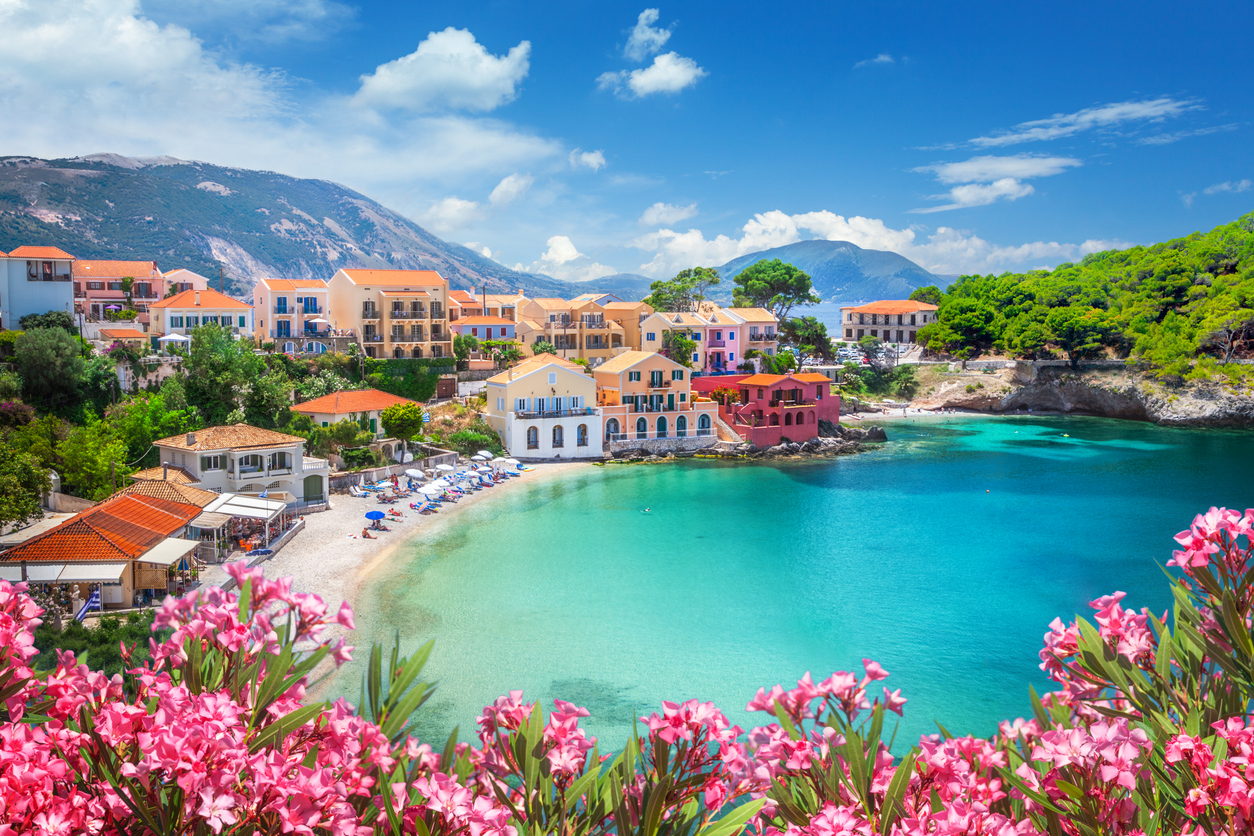
The old town makes much of daily life walkable, with cafes, bakeries, shops, and the waterfront close together. Living on Corfu still means accepting some of the practical realities of island life, especially when you need to travel to the mainland or access services that aren’t available locally.
What is the cost of living in Greece?
In Greece, housing has become a challenge for both locals and expats in recent years. Rents in Athens rose by more than 50% between 2019 and 2024, and demand continues to outpace supply in many of the places Americans are most likely to consider living. This means rent will probably have the biggest influence on your monthly budget.
Here’s how average rents compare across popular expat cities:
| Location | One-bedroom apartment (city center) | One-bedroom apartment (outside city center) |
| Athens | €630 ($736) | €531 ($620) |
| Thessaloniki | €537 ($628) | €417 ($487) |
| Heraklion | €559 ($654) | €426 ($498) |
| Chania | €554 ($648) | €442 ($516) |
| Corfu | €546 ($639) | €527 ($617) |
Alongside rent, a few other everyday costs are worth factoring into your budget:
- Food and dining: One person spends around $279 per month on groceries and $166 dining out. Weekly laïkí agorá markets can keep fresh produce costs down, while imported products tend to cost more.
- Transportation: A standard Athens public transport ticket costs €1.20 ($1.40) and covers 90 minutes of travel. Island living may mean adding a car, fuel, and ferry trips to your budget.
- Winter heating: Older apartments aren’t always well insulated, so heating costs can be an additional expense during the colder months. Eligible residents may be able to offset some of the cost through Greece’s winter heating allowance.
Families will need a larger budget, especially for education and childcare expenses. International school tuition ranges from €6,000–€10,000 ($7,000–$11,700) per year, with childcare and a larger home adding to the overall cost.
💡 Pro Tip:
Don’t rush to give up your table after finishing your coffee. Lingering for an hour or more over a €3–€4 drink is common in Greece.
What is housing like in Greece?
The homes you find in Greece often reflect where you live. Athens and Thessaloniki are dominated by apartment buildings, while the whitewashed homes associated with the Cyclades look very different from Corfu’s pastel Venetian-influenced buildings or the stone houses found in many villages. Older homes may have less insulation, different heating systems, and no elevator or dedicated parking.
Renting a home
Some rentals are advertised online, while others are found through more traditional means, like an ΕΝΟΙΚΙΑΖΕΤΑΙ (“For Rent”) sign hanging from a balcony. Most searches start with property websites, local Facebook groups, and real estate agents, but it can pay to look beyond what’s listed online. Walking or driving around a neighborhood and calling the numbers on rental signs can still turn up homes you wouldn’t otherwise find.
Once you start viewing properties, the renting process may involve:
- Signing a property indication form. Before a viewing, an agent may ask you to sign a form confirming that they introduced you to the property. Read it carefully and confirm what fee you’ll owe if you rent the home.
- Meeting the owner. A viewing can feel personal because you may spend time talking with the landlord about yourself, the neighborhood, or the history of the home before you ever discuss the lease.
- Confirming what’s included in the rent. Utilities and other housing costs may be paid separately, so ask what’s included in the advertised price and how the home is heated before signing.
The search can be difficult in places with large student populations or busy tourist seasons. A property available for a long-term lease in winter may return to the short-term rental market for summer, so confirming how long you can stay can help you avoid surprises down the road.
Buying a home
Americans can buy property in Greece, but buying a home doesn’t automatically give you the right to live there. You’ll still need a visa or residence permit unless you’re purchasing a qualifying investment specifically through Greece’s Golden Visa program.
Here’s what you’ll need to navigate when buying:
- Greek tax number (AFM): You’ll need an AFM before completing a property transaction. A lawyer can usually help obtain one on your behalf.
- Legal checks: Hire an independent Greek lawyer to verify ownership, review the title, and check for debts, permits, or other issues attached to the property.
- Restricted areas: Buying in certain border or strategically sensitive areas, including some islands, may require additional government approval.
- Purchase costs: Taxes, notary and registration fees, legal fees, and agent commissions can add roughly 7%–10% to the purchase price. Owners also pay Greece’s annual ENFIA property tax.
Financing can be more complicated for Americans without established financial ties to Greece, so some foreign buyers purchase with cash or arrange financing outside the country.
What is healthcare like in Greece?
Greece has both publicly funded and fully private healthcare, and Americans may use one or both depending on their eligibility, insurance, and healthcare needs. The way you access care, where you receive it, and what you pay can differ depending on which route you use.
How the healthcare system works
Americans covered by Greece’s social security system can access publicly funded healthcare once they have an AMKA, Greece’s social security number, and active insurance coverage.
When navigating the healthcare system, you’ll come across two names: the National Organization for Healthcare Services Provision (EOPYY) and the National Health System (ESY). Both are part of Greece’s public healthcare system, but they play different roles:
- EOPYY manages healthcare benefits. It pays for covered services and contracts with public and private providers. Depending on the service and provider, you may still have a co-pay or participation fee.
- ESY provides public care. It is Greece’s network of state-run health centers and hospitals, providing everything from primary and emergency care to specialist and hospital treatment.
If you’re covered by the public system, you may receive care directly through an ESY facility or from a private provider that has a contract with EOPYY. What you pay can differ depending on the service and provider.
You can also go completely outside the public system by visiting a private provider and paying out of pocket or using private health insurance. Many expats combine publicly funded and fully private care, especially when they want a faster appointment, more choice of doctors, or easier access to an English-speaking provider.
Your options can narrow outside the major cities. Athens and Thessaloniki have the broadest range of hospitals and specialists, compared with smaller islands that may only have a health center or basic hospital. More complex treatment can require traveling to a larger island or the mainland.
💡 Pro Tip:
Save Greece's emergency numbers in your phone. Call 166 for an ambulance or 112 for the European emergency line.
What taxes do Americans pay in Greece?
Living in Greece can create tax obligations in both Greece and the United States. Greece looks at your residency and ties to the country to determine what income it can tax, while U.S. citizens and green card holders generally continue filing U.S. tax returns on their worldwide income.
Greek tax residency
You may be considered a Greek tax resident if you:
- Spend more than 183 days in Greece during any 12-month period.
- Have your permanent or principal home in Greece.
- Have your center of vital interests in Greece, based on your personal and economic ties.
Once you become a Greek tax resident, Greece generally taxes your worldwide income. Non-residents are generally taxed only on income sourced from Greece.
Greece uses progressive income tax rates, and the amount you pay depends on the amount and type of income you receive. This means employment, rental, investment, and other types of income can follow different tax rules.
U.S. tax filing from Greece
Moving to Greece doesn’t end your U.S. tax obligations. Alongside an annual U.S. tax return, you may also have additional reporting requirements if you hold Greek bank accounts or other foreign financial assets:
- FBAR: Required if the combined value of your foreign financial accounts exceeds $10,000 at any point during the year.
- FATCA: Required if your foreign financial assets exceed the applicable threshold. For a single filer living abroad, that is generally more than $200,000 on the last day of the year or more than $300,000 at any point during the year.
Avoiding double taxation
The U.S. and Greece have an income tax treaty, but the treaty doesn’t automatically prevent double taxation. Depending on your situation, you may be able to reduce your U.S. tax liability by claiming:
- Foreign Earned Income Exclusion (FEIE): Eligible Americans abroad can exclude up to $132,900 of foreign-earned income from U.S. federal income tax for the 2026 tax year.
- Foreign Tax Credit (FTC): Eligible Greek income taxes can be used as a credit against U.S. tax on the same income.
The right approach depends on the type of income you receive, how much Greek tax you pay, and your overall U.S. tax position.
💡 Pro Tip:
The U.S.–Greece Social Security agreement can prevent some workers from paying into both systems on the same earnings. Check which country covers you before making contributions.
Get your U.S. taxes ready for life in Greece
A move to Greece can bring new financial responsibilities as you become a tax resident, open local bank accounts, or begin earning income abroad. You may need to report income or financial accounts in one or both countries and understand which tax rules apply to each.
Bright!Tax helps Americans living in Greece navigate federal tax returns, FBAR and FATCA reporting, and strategies for reducing double taxation, so you can spend less time untangling cross-border rules and more time settling into your life abroad. Contact us today to understand what you need to file and how your U.S. and Greek tax obligations fit together.
Frequently Asked Questions (FAQs)
-
Can Americans move to Greece permanently?
Yes. Americans planning a long stay in Greece will need a pathway based on their circumstances, such as remote work, employment, family ties, independent income, or qualifying investment through the Greece Golden Visa. Depending on the route, you’ll need a visa, residence permit, or both, with some residents eventually qualifying for long-term or permanent residence.
-
Can Americans become Greek citizens?
Yes. Americans may qualify for Greek citizenship through naturalization after meeting the applicable residence and integration requirements, or through descent if they have qualifying Greek ancestry. The process depends on your circumstances and is separate from holding a residence permit.
-
Do you need to speak Greek to live in Greece?
No, especially in Athens, Thessaloniki, and other places where English is widely spoken. Learning Greek becomes more useful as everyday life expands beyond restaurants and tourist-facing businesses. It can make conversations with neighbors, landlords, tradespeople, and government offices easier, particularly in smaller cities and rural areas.
-
Can I collect U.S. Social Security while living in Greece?
Yes. Eligible U.S. citizens can generally continue receiving Social Security benefits while living in Greece. The U.S.–Greece Social Security agreement can also help people who have worked in both countries qualify for benefits by combining eligible periods of coverage.
-
Is it cheaper to live in Greece than in the U.S.?
Generally, yes. Housing, dining out, and public transportation can come at a lower cost than in the U.S., but Athens and popular islands tend to be more expensive. Greece can also be more affordable than some Western European countries, but lower local salaries and rising housing costs mean that affordability can look different if you’re earning a Greek income.
-
What should Americans know about Greek culture before moving?
Personal relationships play an important role in Greek culture, and filoxenia, a tradition of hospitality toward guests and strangers, still shapes many social interactions. Greece’s rich history also means customs and identity can vary by region, so the culture you encounter in Crete may feel different from life in Athens or northern Greece.
-
Where do most American expats live in Greece?
Athens has the country’s largest and most diverse expat community, while Thessaloniki, Crete, and Corfu also have established international populations. Santorini and Mykonos are highly international but more seasonal, so their expat communities and everyday life can change considerably once the summer tourism season ends.
-
What is life in Greece like for Americans?
Many Americans find that more of everyday life happens outside the home, from meeting friends over coffee to spending evenings in neighborhood squares and outdoor restaurants. Combined with a Mediterranean climate and walkable neighborhoods in many areas, that can contribute to a high quality of life for people who enjoy a more social, community-oriented routine.
-
Can Americans buy property in Greece?
Yes. Americans can generally buy apartments, houses, and other real estate in Greece. You’ll need a Greek tax identification number (AFM), and additional permission may apply when purchasing property in certain designated border or strategic areas.
-
Do Americans living in Greece pay taxes in both countries?
Potentially. Americans who become Greek tax residents are generally subject to Greek tax on their worldwide income while remaining subject to U.S. tax rules as U.S. citizens or green card holders. This can create tax obligations in both countries, although tax credits, exclusions, and the U.S.–Greece tax treaty can help reduce the risk of paying tax twice on the same income.
-
Can I use my U.S. driver's license in Greece?
A valid U.S. driver’s license can be used in Greece under the rules for foreign licenses, but different requirements apply once you become a resident. Eligible U.S. license holders can convert their license to a Greek driving license through Greece’s official conversion process.