
 Get to know the author
 Connect on LinkedIn
Malta is one of the few places where you can settle into daily life as an American without first overcoming a language barrier. English is an official language, so most everyday interactions, government services, and paperwork can be handled without speaking Maltese fluently.
This leaves room for the practical questions: How competitive is the housing market? Which residency pathway fits your plans? How do you access healthcare? And what happens to your U.S. tax obligations when you’re in a new country? Getting answers to those questions helps you decide whether life in Malta is right for you.
Snapshot of expat life in Malta
| Category | Details |
| Country | Malta |
| Capital city | Valletta |
| Currency | Euro (EUR / €) |
| Official language(s) | Maltese, English |
| Population | Approximately 551,000 |
| Estimated Americans living in Malta | Approximately 6,000 |
| Tax year | January 1–December 31 |
| Local tax deadline | July 31 for both manual and electronic submissions |
| U.S. tax deadline for expats | June 15 automatic extension; October 15 if an extension is filed |
| Primary U.S. tax form | Form 1040 |
| Primary local tax form | Individual Income Tax Return / Self-Assessment Form |
| Tax treaty with the U.S.? | Yes |
| Totalization agreement with the U.S.? | No |
| Common expat tax considerations | Maltese tax residency and remittance-based taxationActive U.S.-Malta tax treaty No U.S.-Malta totalization agreement FEIE/FTC planning FBAR and FATCA reporting |
Is Malta a good fit for Americans?
Choosing to live in Malta means embracing life in one of Europe’s smallest countries. The island’s small size influences almost everything, from how long it takes to get across the country to how often you’ll return to the same cafes, beaches, and neighborhoods. The country also combines a Mediterranean climate, a high standard of living, easy access to other European countries, and an English-speaking environment that removes one of the biggest hurdles many Americans face when moving abroad.
That doesn’t mean Malta feels like an extension of the United States, though. Local traditions, administrative processes, and everyday routines are distinctly Maltese, and settling in still requires an openness to doing things differently. For some Americans, those differences, combined with the island’s close-knit feel, are exactly what they’re looking for. Others eventually decide Malta’s size and way of life aren’t the right long-term fit.
What’s it like to live in Malta as an American?
Life in Malta sits at the intersection of long-standing traditions and constant change. Village festas continue to bring communities together, English and Maltese are used side by side, and historic limestone streetscapes often stand beside new apartment developments and construction cranes. Those contrasts shape the communities you’ll become part of, the way you’ll get around, and the changing landscape around you.
Community
Malta has a large international community, but local traditions remain a visible part of everyday life. Throughout the year, villages celebrate their patron saints with festas, community celebrations that fill the streets with religious processions, brass bands, food stalls, and fireworks. During the summer, it’s common to hear fireworks in the evening as your village and neighboring communities hold their annual celebrations. Events like Carnival, Easter processions, and Christmas celebrations also bring communities together, giving the calendar a distinctly Maltese feel.
Language
English is usually enough to navigate daily life, but Maltese remains an important part of the island’s identity. You’ll hear it in conversations between locals, on television and radio, and during community events, even if the conversation switches between English and Maltese. That bilingual environment means it’s easy to settle in while still being reminded that you’re living somewhere with its own language and culture.
Getting around
Malta’s bus network connects towns and villages across the island, making it a practical option for commuting and everyday errands. Many residents also drive, especially if they live outside the busiest urban areas. Even on a small island, traffic congestion is a regular part of daily life, so many people choose where they live based on their commute rather than the distance on a map.
Rapid development
Construction is a common part of everyday life in Malta, particularly in growing residential areas. New apartment buildings, road projects, and redevelopment continue to reshape the island, so it’s not unusual to see cranes and construction sites alongside historic neighborhoods. Depending on where you live, ongoing development may be something you notice every day.
Visas and residency options for Americans in Malta
You have several options for living in Malta beyond the standard tourist stay. Some are tied to work or study, while others are designed for retirees, families, or financially independent individuals. Malta’s residency system includes both residence permits and specialized residency programs, so the option that’s right for you depends on your circumstances.
Common residency pathways include:
- Remote work: If you work remotely for an employer or clients based outside Malta, the Nomad Residence Permit allows you to live in Malta while continuing to earn your income abroad.
- Local employment: If you’ve accepted a job offer with a Maltese employer, you’ll generally apply for a Single Permit, which combines residence and work authorization in one application.
- Study: If you’re enrolled in a recognized educational institution, you can apply for a Student Residence Permit, which can be renewed annually for the duration of your studies.
- Retirement: Americans whose pension makes up at least 75% of their chargeable income may qualify for the Malta Retirement Programme. Applicants must also buy or rent qualifying property and maintain comprehensive health insurance.
- Family: If you have a qualifying family member who legally resides in Malta, you may be eligible to apply through family reunification.
- Global residence: Americans who are financially self-sufficient may qualify for Malta’s Global Residence Programme (GRP). Applicants must buy or rent qualifying property, maintain comprehensive health insurance, and meet the program’s tax and eligibility requirements.
If you’re seeking permanent residence, you may qualify for the Malta Permanent Residence Programme (MPRP). The program is designed for non-EU nationals who meet more extensive financial, property, and due diligence requirements than those required for Malta’s temporary residence permits.
Working in Malta as an American
As an American, you can work in Malta, but the requirements and tax implications depend on who you’re working for. Taking a job with a Maltese employer, working remotely for a company abroad, or running your own business can each affect your residency status, how you’re taxed, and whether you’re required to contribute to Malta’s social security system.
Working for a Maltese employer
If you’ve accepted a job offer with a Maltese employer, you’ll generally apply for a Single Permit, which serves as both your residence permit and work permit. Your employer typically withholds Maltese income tax and social security contributions from your paycheck, similar to payroll withholding in the United States. Even if those taxes are withheld in Malta, you’ll still need to file a U.S. tax return each year.
Working remotely
If you’re working remotely for an employer or clients based outside Malta, the Nomad Residence Permit allows you to continue earning foreign income while living on the island. Depending on how much time you spend in Malta and your individual circumstances, you will eventually be connected to Malta’s local tax system, which you’ll navigate alongside your continuing U.S. tax obligations.
Self-employment
If you want to operate a business or work as a self-employed professional from Malta, you need a residency pathway that permits self-employment. Depending on how your business is structured, you may also have tax registration, social security, and reporting obligations in Malta alongside your continuing U.S. tax responsibilities. U.S. self-employment tax is separate from U.S. income tax, so living abroad doesn’t automatically eliminate it.
What’s the cost of living in Malta for Americans?
Malta offers a lower cost of living than the United States, with overall expenses estimated to be about 10% lower. Housing is usually the biggest factor in your monthly budget, and because Malta is so compact, where you choose to live often matters more than how far you live from work or the coast. Renting in St. Julian’s or Sliema typically costs more than renting in towns like Mosta, Birkirkara, or other inland communities, even though they’re only a short drive or bus ride away.
Average monthly rental costs in Malta may look like this:
| Housing type | Cost |
| One-bedroom apartment (city center) | €753–€1,568 ($877–$1,824 USD) |
| One-bedroom apartment (outside city center) | €703–€1,105 ($819–$1,286 USD) |
| Three-bedroom apartment (city center) | €1,206–€2,914 ($1,403–$3,391 USD) |
| Three-bedroom apartment (outside city center) | €1,005–€2,176 ($1,169–$2,532 USD) |
Beyond rent, a few everyday expenses can have a noticeable impact on your monthly budget:
- Food and groceries: Shopping for local produce, eating at neighborhood cafes, and buying locally produced goods can help keep costs down, while imported groceries, American brands, and specialty products generally cost more.
- Transportation: Residents with a valid personalized Tallinja Card can use Malta’s public transportation free of charge, making it possible for many people to get around without owning a car. Those who live in Gozo often budget for regular ferry trips to Malta as well.
- Utilities: Electricity bills often increase during the summer as air conditioning becomes essential in many homes.
Families should also factor education into their budget. Malta’s public schools are free for residents and can be a good long-term option, especially for younger children who can adapt to the country’s bilingual education system. Many American expat families, however, choose private or international schools, where instruction is primarily in English and internationally recognized curricula can make it easier for children to transition between countries. Tuition at private and international schools typically ranges from €6,000 to €9,000 ($6,900–$10,400 USD) per year, though some schools and programs can cost more.
💡 Pro Tip:
Set aside a monthly travel budget if you plan to explore Europe regularly. Malta's location makes weekend trips to countries like Italy, Greece, Portugal, and Spain easy, and those costs can add up over time.
What are the best cities in Malta for American expats?
Malta may be small, but each town has its own character. Living along the waterfront in Sliema feels very different from settling in the quieter streets of Mosta or the medieval walls of Mdina, even though they’re only a short drive apart. Choosing where to live often comes down to the kind of daily routine you’re looking for.
1. St. Julian’s
St. Julian’s is one of Malta’s most international towns and a hub for the country’s gaming, finance, and hospitality industries. Life here revolves around the waterfront, where cafes, restaurants, supermarkets, and coworking spaces are all within walking distance. Spinola Bay is a popular gathering place after work, while nearby Paceville keeps the area lively well into the evening. That convenience comes with some of Malta’s highest rents and a busier atmosphere, especially during the summer tourist season.
2. Sliema
Sliema combines many of the conveniences of St. Julian’s with a more residential feel. The seafront promenade stretches for several miles, making it a popular place for morning walks, evening runs, and outdoor dining. Ferries connect Sliema to Valletta in just a few minutes, and most daily errands can be done on foot. Housing is still among the island’s most expensive, but many residents find the walkability and waterfront lifestyle worth the added cost.
3. Valletta
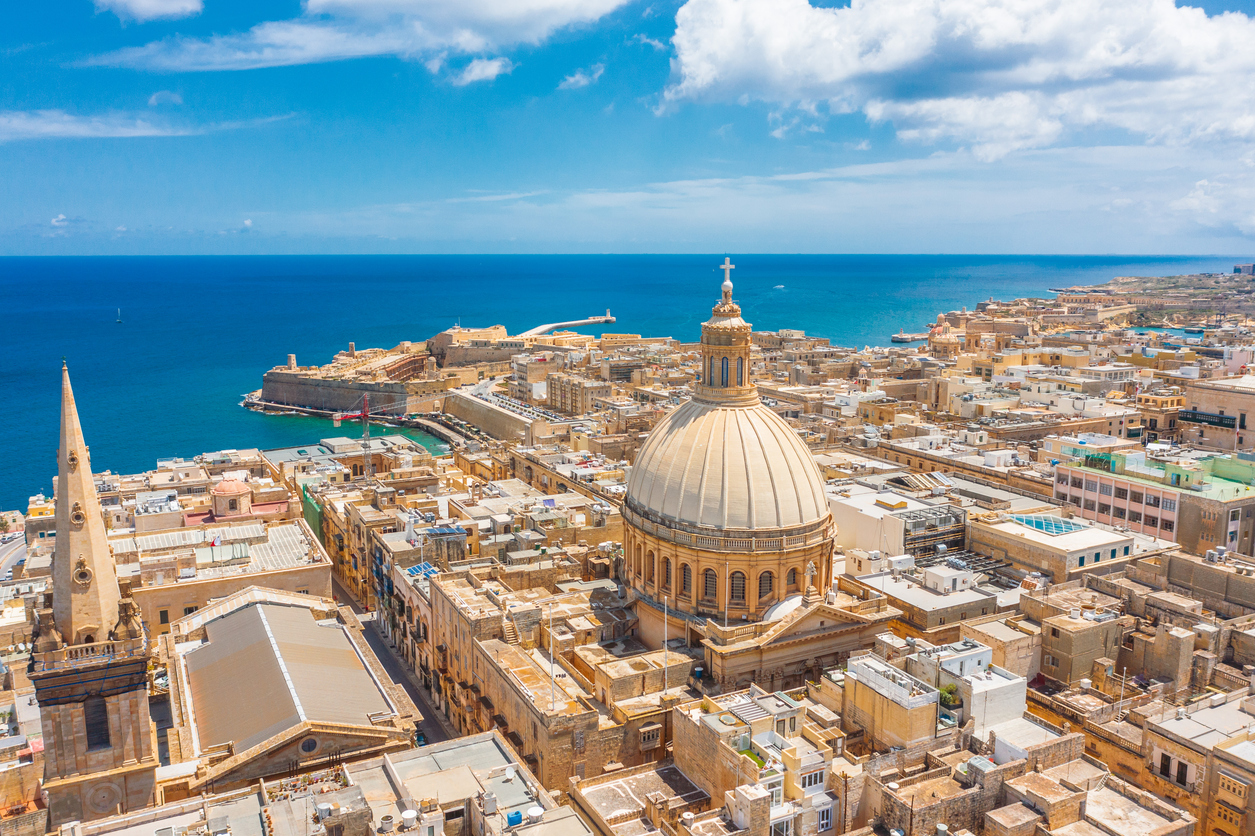
As Malta’s capital, Valletta offers a very different living experience from the island’s larger residential towns. Home to fewer than 6,000 residents, its narrow streets fill each morning with government workers, cruise passengers, and visitors before becoming noticeably quieter in the evening. Living here means being surrounded by historic architecture, museums, cafes, and cultural events. However, housing options are more limited and many properties are located in centuries-old buildings.
4. Mosta
Mosta offers a slower, more residential pace while remaining well connected to the rest of the island. The town is centered around the Mosta Rotunda, where cafes, shops, and community events give the area a distinctly local feel. Homes are often larger than those found in Malta’s busiest coastal towns, and rents are generally lower, making Mosta a popular choice for families and professionals who don’t mind commuting a little farther.
5. Mdina
Known as the Silent City, Mdina offers one of the quietest living environments in Malta. Once the daytime visitors leave, daily life settles into a slower pace, with narrow stone streets and medieval architecture replacing the cafes, traffic, and waterfront promenades found elsewhere on the island. Housing within the city’s walls is limited, but nearby communities offer a similar atmosphere while keeping everyday amenities within easy reach.
Should you rent or buy in Malta?
You can both rent and buy property in Malta as an American, but the experience is different depending on which path you choose. Rentals are widely available, while buying comes with additional rules for non-EU citizens that don’t apply to Maltese or EU buyers. Which option makes the most sense depends on your long-term plans and whether you’re ready to purchase a home under Malta’s property laws.
Renting
Renting property in Malta often happens quickly, especially in popular expat towns like St. Julian’s and Sliema, where well-priced apartments don’t stay on the market for long. Once you’ve found a place, there are a few parts of the rental process that can affect both your move-in costs and the paperwork you’ll need later.
- Lease agreement: Most long-term residential leases run for at least one year under Malta’s Private Residential Leases Act. Your landlord must register the agreement with the Housing Authority, and you’ll often need the registered lease when applying for residency or renewing permits.
- Upfront costs: Expect to pay your first month’s rent in advance, a security deposit equal to one month’s rent (though some landlords request up to three months), and, if you use an estate agent, an agency fee equal to 50% of one month’s rent plus VAT.
- What’s included: Advertised rent doesn’t always include utilities, internet, or other services. Confirm exactly what the monthly rent covers before signing the lease so you can compare properties accurately and budget for your monthly housing costs.
Most long-term rentals are listed through local estate agencies and property portals such as QuickLets, RE/MAX Malta, and Djar. If you’re relocating for work, ask whether your employer offers temporary accommodation or relocation assistance while you search for a long-term home.
Buying
Buying property in Malta comes with different rules depending on where you purchase. Special Designated Areas (SDAs) are developments where non-EU citizens can generally purchase property without obtaining an Acquisition of Immovable Property (AIP) permit. Outside an SDA, you may need an AIP permit, which allows non-EU buyers to purchase one property intended as their primary residence.
If you decide to buy, here’s what to expect during the purchase process:
- Promise of sale (konvenju): Once your offer is accepted, you’ll usually sign a legally binding preliminary agreement and pay a deposit while the sale moves toward completion.
- Notary: A notary verifies the property’s ownership history, legal status, and any outstanding debts before the sale is finalized. Unlike in the United States, the notary acts as a neutral public official responsible for ensuring the transaction is legally valid rather than representing either the buyer or seller.
- Closing costs: In addition to the purchase price, buyers should budget for stamp duty, notary fees, registration and search fees, and, where applicable, the AIP permit fee.
💡 Pro Tip:
If your move is flexible, start your rental search before summer. Competition for apartments in popular coastal towns increases during the busy season, leaving fewer properties to choose from.
How does healthcare work in Malta?
Healthcare in Malta is divided between a publicly funded system and an extensive private network. Each offers different benefits, and the care available to you depends on your residency status, employment, and health insurance.
Public vs. private healthcare
Access to Malta’s public healthcare system depends on how you’re living and working in the country. If you work for a Maltese employer and contribute to Malta’s social security system, you generally qualify for public healthcare.
Most routine care will start at one of Malta’s ten regional health centers, where you’ll see a general practitioner or access services, such as:
- Primary care
- Hospital care
- Emergency care
- Specialist care (typically with a referral)
- Maternity care
If your condition requires specialist treatment, surgery, or other hospital-based care, you’ll typically be referred through Malta’s public hospital system, led by Mater Dei Hospital in Msida, the country’s main public hospital.
Many expats choose private healthcare because it often provides faster access to specialists, shorter wait times for procedures, and appointments through hospitals and clinics across the island. It also helps meet the private health insurance requirements for certain residency pathways, including the Nomad Residence Permit and Global Residence Programme.
Pharmacies and medications
Community pharmacies are an important part of everyday healthcare in Malta. In addition to filling prescriptions and selling over-the-counter medications, many also host walk-in clinics where general practitioners see patients without appointments, making it easy to get medical advice or a prescription.
If you need medication outside normal business hours, Malta operates a duty pharmacy system. This means pharmacies take turns staying open during evenings, Sundays, and public holidays, ensuring that at least one pharmacy remains open in each locality while others are closed.
💡 Pro Tip:
If you take a prescription medication, ask your doctor about the Maltese equivalent. Brand names and availability can differ, and sorting it out before you need a refill can save time later.
Taxes in Malta for Americans
Moving to Malta doesn’t end your U.S. tax obligations. Depending on how long you stay, where you earn your income, and your residency status, you may need to file tax returns in both Malta and the United States.
When do you become a tax resident in Malta?
Malta’s tax system distinguishes between residence and domicile, and the difference can affect how your income is taxed.
- Residence: You’ll generally become a Maltese tax resident if you spend more than 183 days in Malta during a calendar year or establish your ordinary residence there, meaning Malta has become the country where you regularly live and have established your day-to-day life.
- Domicile: Refers to the country considered as your permanent home under Maltese law. Unlike tax residence, it doesn’t usually change simply because you’ve moved abroad.
It’s possible to be a Maltese tax resident while remaining domiciled in another country. Most Americans who relocate to Malta become Maltese tax residents but continue to be domiciled in the United States.
How does Malta tax income?
Becoming a Maltese tax resident doesn’t mean all your worldwide income is automatically taxed in Malta. If you live in Malta but remain domiciled in the United States, you’re generally taxed on a remittance basis.
In practice, this means:
- Income earned in Malta is generally taxable in Malta.
- Foreign income is generally taxed only if it’s brought into Malta.
- Foreign capital gains are generally not taxable in Malta, even if the proceeds are transferred there.
Income that is taxable in Malta is generally subject to progressive income tax rates, so the tax rate you pay depends on both your taxable income and how much of your income falls within Malta’s tax system under the remittance basis.
Understanding when income is considered remitted can make a significant difference to your Maltese tax bill, particularly if you receive investment income, rental income, retirement income, or other foreign earnings.
Ongoing U.S. tax obligations
U.S. citizens and green card holders generally continue filing an annual U.S. federal tax return even while living in Malta. Depending on your financial situation, you may also need to report foreign financial accounts and other overseas assets.
Filing in both countries doesn’t necessarily mean paying tax twice on the same income. You can reduce or eliminate double taxation by using the Foreign Earned Income Exclusion (FEIE) or the Foreign Tax Credit (FTC).
💡 Pro Tip:
If you have investment income, rental income, or retirement distributions, speak with a cross-border tax professional before transferring the funds to Malta. The timing of a transfer can affect how your income is taxed under Malta's remittance basis.
Malta is easier to enjoy when your taxes are sorted
Settling into life in Malta is easier when you understand how the country’s tax system works alongside your ongoing U.S. tax obligations. Taking the time to understand how the two systems interact before you move can help you settle in with fewer tax surprises.
That’s where Bright!Tax can help. Our team can help you understand how Malta’s remittance basis, your U.S. filing requirements, foreign financial accounts, and available tax benefits fit together. Get in touch today to speak with a U.S. expat tax expert and build a tax strategy that supports your life in Malta.
Frequently Asked Questions (FAQs)
-
Is Malta a good place to retire for Americans?
For many retirees, yes. Malta offers a high quality of life, an English-speaking environment, and access to both public and private healthcare, while its central Mediterranean location makes travel around Europe relatively easy. It’s worth planning ahead to understand how residency, healthcare, and taxes fit into your retirement plans.
-
Does Malta tax U.S. Social Security?
It depends on your tax residency, domicile status, and how your benefits are treated under Malta’s tax rules and the U.S.-Malta tax treaty. Because the rules can vary, many retirees benefit from speaking with a cross-border tax professional before relocating.
-
Can Americans get Malta citizenship?
Yes, but usually only after meeting Malta’s residency and naturalization requirements. Long-term residence doesn’t automatically lead to Maltese citizenship, but if you eventually qualify, you can generally keep your U.S. citizenship because Malta recognizes dual citizenship.
-
How long can a U.S. citizen stay in Malta without a visa?
You can generally visit Malta and the rest of the Schengen Area visa-free for up to 90 days within any 180-day period. Staying longer usually requires a residence permit through a pathway such as Malta’s Digital Nomad Visa (formally known as the Nomad Residence Permit), Malta Global Residence Programme, Malta Retirement Programme, or another long-term residence option.
-
Where do most expats live in Malta?
Many expatriates choose St. Julian’s and Sliema for their waterfront lifestyle, international communities, and vibrant nightlife. Entrepreneurs, remote workers, and professionals often settle there because they’re close to coworking spaces and major employers, while families and retirees frequently choose quieter towns such as Mosta for larger homes and a slower pace of life.
-
Can Americans open a bank account in Malta?
Yes. Most banks require proof of identity, a Maltese address, and documentation showing your legal right to live in the country. Some banks may also ask for proof of income or the reason you’re opening the account, so requirements can vary depending on your residency status.
-
What language do people speak in Malta?
Malta has two official languages: Maltese and English. You can comfortably manage everyday life in English, but you’ll often hear locals switch between the two languages in conversation, making bilingualism part of daily life across the island.
-
Is Malta safe for American expats?
Generally, yes. Malta has relatively low levels of violent crime, and most safety concerns involve opportunistic theft in busy tourist areas rather than serious crime. Many Americans find it comfortable to walk around towns and cities, even after dark, while still taking normal precautions.
-
What is Malta known for?
Malta is known for its fortified cities, prehistoric temples, and centuries of Mediterranean history shaped by civilizations ranging from the Phoenicians to the Knights of St. John. The country is also home to three UNESCO World Heritage Sites, including Valletta and the Ħal Saflieni Hypogeum.
-
Can Americans drive in Malta?
Yes, but adjusting to driving on the left-hand side of the road is often the biggest challenge for newcomers. Depending on your residency status and how long you stay, you may also need to exchange your U.S. driver’s license for a Maltese one.
-
Is Malta a good place to raise a family?
For many families, yes. Malta’s compact size means shorter commutes and easy access to schools, healthcare, and everyday services, while English-speaking education makes the transition easier for many American children.
-
Do Americans still have to file U.S. taxes while living in Malta?
Yes. Living in Malta doesn’t end your U.S. filing obligations because the United States taxes its citizens regardless of where they live. You can reduce or eliminate double taxation through available tax benefits, but you generally still need to file each year.
-
Can Americans buy real estate in Malta?
Yes. You can buy real estate in Malta as an American, but the rules depend on where the property is located and whether you qualify to purchase without an Acquisition of Immovable Property (AIP) permit. Certain designated areas allow foreign buyers to purchase more freely, while other properties may require additional approval.